
 3 hours ago
10
3 hours ago
10
ARTICLE AD BOX
Natasha Bootyand Richard Kagoe

 AFP via Getty Images
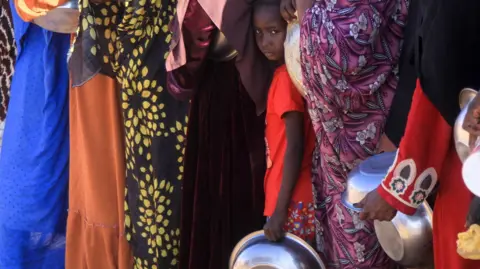
Some have managed to flee to aid camps further north and west
More than 6,000 people were killed in just three days when Sudan's paramilitary Rapid Support Forces (RSF) seized the city of el-Fasher last year, according to victims and witnesses cited in a UN report.
"It was like a scene out of a horror movie," recalled one person, who saw bodies thrown into the air as RSF fighters opened fire on 1,000 people sheltering in a university building last October.
The RSF has not commented on the report but has denied previous such accusations.
These latest findings mirror abuses documented in earlier RSF offensives.
Sudan remains locked in an almost three‑year power struggle between the regular army and the RSF paramilitaries. The ongoing civil war has killed hundreds of thousands of people, and forced more than 13 million people from their homes. Widespread sexual violence against men, women and children is being used as a weapon of war.
Both the RSF and the Sudanese Armed Forces have been accused of atrocities.
The US and Human Rights Watch believe the RSF and its allies have waged a genocide in the western Darfur region against the Massalit people and other non-Arab communities, but recent UN reports have stopped short of calling it this.
El-Fasher, a key city located in Darfur, came under 18 months of sustained siege. It is where some of the most harrowing stories have emerged in this conflict.
More than 140 victims and witnesses gave testimony in Sudan's Northern state and in eastern Chad in late 2025, according to the UN Human Rights Office.
In those first few days of the assault on el-Fasher, the UN says "at least 4,400 people were killed" within the city, and "over 1,600 others along exit routes as they fled".
"The actual scale of the death toll during the week-long offensive is undoubtedly significantly higher," the report adds.
The UN Human Rights Chief, Volker Türk, has renewed calls on all sides in Sudan to end what he described as grave violations by forces under their command.
International pressure has been increasing on the backers of this conflict to disengage.
The UAE has denied widespread claims that it is the main supplier of arms to RSF fighters.
Last week, the UK imposed sanctions on six key figures it said were fuelling Sudan's war - including senior commanders in the army and the RSF, as well as three foreign nationals allegedly responsible for recruiting Colombian mercenaries to fight for the RSF.
"The UK has extremely strong controls on arms exports, including to prevent any diversion. We will continue to take that immensely seriously," Foreign Secretary Yvette Cooper said in response.
Plans to set up a rival Sudanese government baaed in the west of the country have been announced by a coalition linked to the RSF, called the Sudan Founding Alliance.
The African Union has rejected those plans, warning that such a move would threaten any prospect of unity.
More BBC stories on Sudan:
To support children in Sudan and other Arabic-speaking countries who are denied or restricted from accessing education, the BBC World Service is launching a new season of the Arabic edition of its award-winning educational programme Dars - or Lesson.
The first episode aired on Saturday 24 January, on BBC News Arabic TV. New episodes are broadcast weekly on Saturdays at 09:30 GMT (11:30 EET), with repeats on Sundays at 05:30 GMT (07:30 EET) and throughout the week.
The programme is also available on digital platforms, including BBC News Arabic YouTube.
 Getty Images/BBC




 English (US) ·